
The Road Trip That Almost Ended Our Vacation Before It Started
Four hours into a seven-hour drive to the beach, my seven-year-old announced she was “absolutely done” with the car. My four-year-old had spilled an entire juice box on the seat twenty minutes earlier. My husband and I hadn’t spoken a complete sentence to each other since a gas station argument about which exit to take outside of Nashville.
Nobody was crying yet. But the silence had that specific pressure-cooker quality that every parent recognizes immediately — the kind that precedes a full family implosion by approximately eight minutes.
We pulled into a random McDonald’s parking lot, let the kids run around a scraggly patch of grass for fifteen minutes, reorganized the snack bag, and quietly reset. We made it to the beach. The week turned out to be genuinely wonderful.
But that parking lot moment taught me something important: family travel doesn’t fail because of kids. It fails because of planning gaps that create avoidable pressure at exactly the wrong moments.
Every family trip since that one has gone measurably better — not because our kids got easier, but because we got smarter about how we prepared. Here’s everything that actually works.
Why Family Travel Feels So Hard and What’s Really Going On
Most family travel stress doesn’t come from the destination or even the kids themselves. The real culprit is the gap between adult travel expectations and child developmental reality.
Adults experience travel as a series of interesting moments connected by necessary transitions. Children experience transitions as the main event — and often a threatening one. Airports, rest stops, hotel check-ins, and restaurant waits aren’t neutral connective tissue between fun activities for a five-year-old. Each one is its own sensory and emotional challenge that requires real energy to navigate.
Understanding this reframes everything. Preparing for transitions as carefully as you prepare for activities is the single biggest mindset shift that improves family travel immediately.
The Real Cost of Overpacking the Itinerary
Trying to do too much is the most common family travel mistake, and it compounds quickly. One overbooked afternoon creates an overtired child, which creates a difficult evening, which creates a poor night of sleep, which makes the next morning harder, which ruins the next day’s activity.
Experienced family travelers typically plan for sixty to seventy percent of what they think is achievable, leaving genuine buffer time for the unexpected — because unexpected things happen constantly with children. A slower pace with happier children beats a packed itinerary with exhausted ones every single time.
Before You Leave: The Preparation That Actually Matters
Packing is the part most parents spend the most time on, but preparation that happens before packing makes the biggest difference in how trips actually feel.
Talk to your kids about the trip in specific, concrete terms before you go. Telling a young child “we’re going on a trip” is almost meaningless. Showing them pictures of the hotel pool, the beach, or the museum you’ll visit gives them a mental image to hold onto and reduces anxiety about the unknown. Children handle transitions better when they can visualize what’s coming.
Build a simple trip countdown together. Paper chains, a calendar they can mark, or even a whiteboard with days remaining gives kids a concrete sense of time that abstract numbers can’t provide. Anticipation, properly channeled, actually improves behavior on travel days because kids have been emotionally preparing rather than being surprised.
Packing the Right Things for Kids Specifically
Adult packing logic doesn’t transfer directly to packing for children. The goal with kids isn’t to bring everything — it’s to bring the right things in the right quantities.
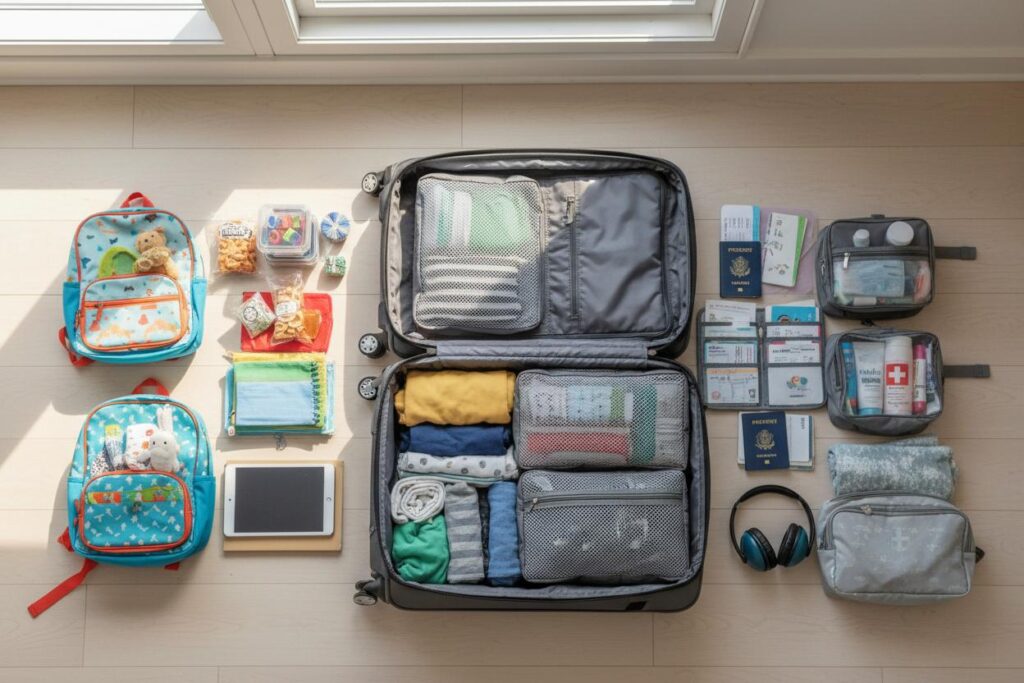
Activity bags deserve serious thought. Each child gets a small backpack they’re responsible for, filled with items chosen specifically for them. Sticker books, small figurines, a new coloring book, and a familiar stuffed animal serve young children far better than screens alone. Novelty is powerful — saving one or two genuinely new small toys for the travel day itself creates excitement at exactly the moment you need it most.
Snacks require their own strategy. Hungry children are difficult children, and hunger escalates every other problem. Pack more snacks than you think you need, variety matters more than volume, and having snacks immediately accessible — not buried in checked luggage — is non-negotiable. Favorite snacks from home provide comfort in unfamiliar environments and serve as reliable mood management tools during stressful transition moments.
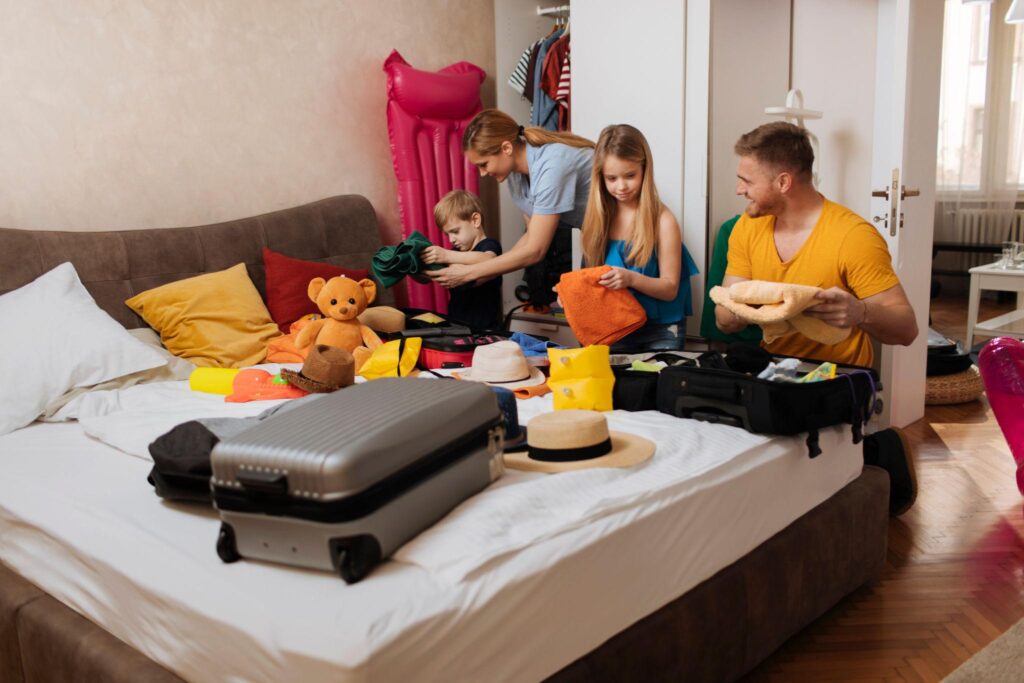
Clothes packing for kids should include one complete extra outfit per day beyond what you plan to wear, stored in individual zip-lock bags so each day’s clothing is already organized. Spills, mud, unexpected rain, and general childhood chaos make this standard practice for any family with young children.
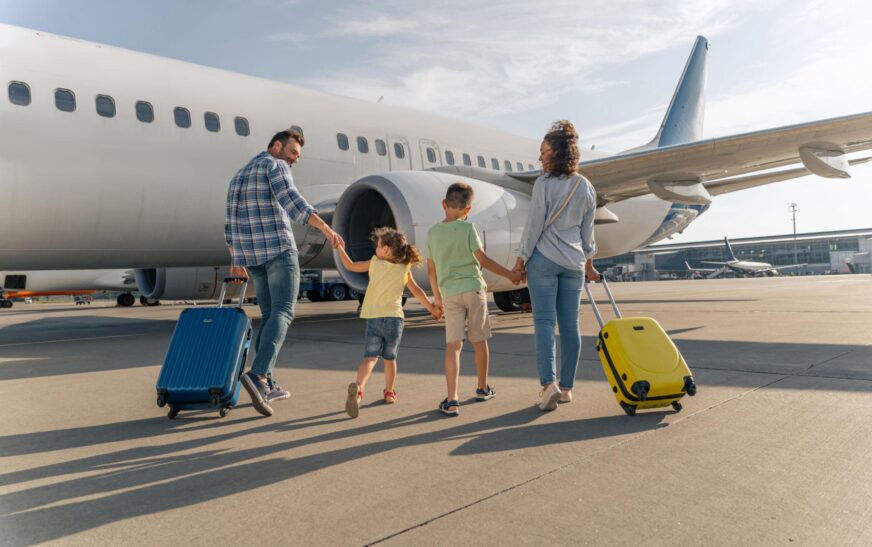
Airport Travel With Kids: A Survival Guide
Airports are sensory environments specifically designed for adults moving efficiently between points. For children, the scale, noise, crowds, and unfamiliarity make them one of the most genuinely challenging travel environments to navigate successfully.
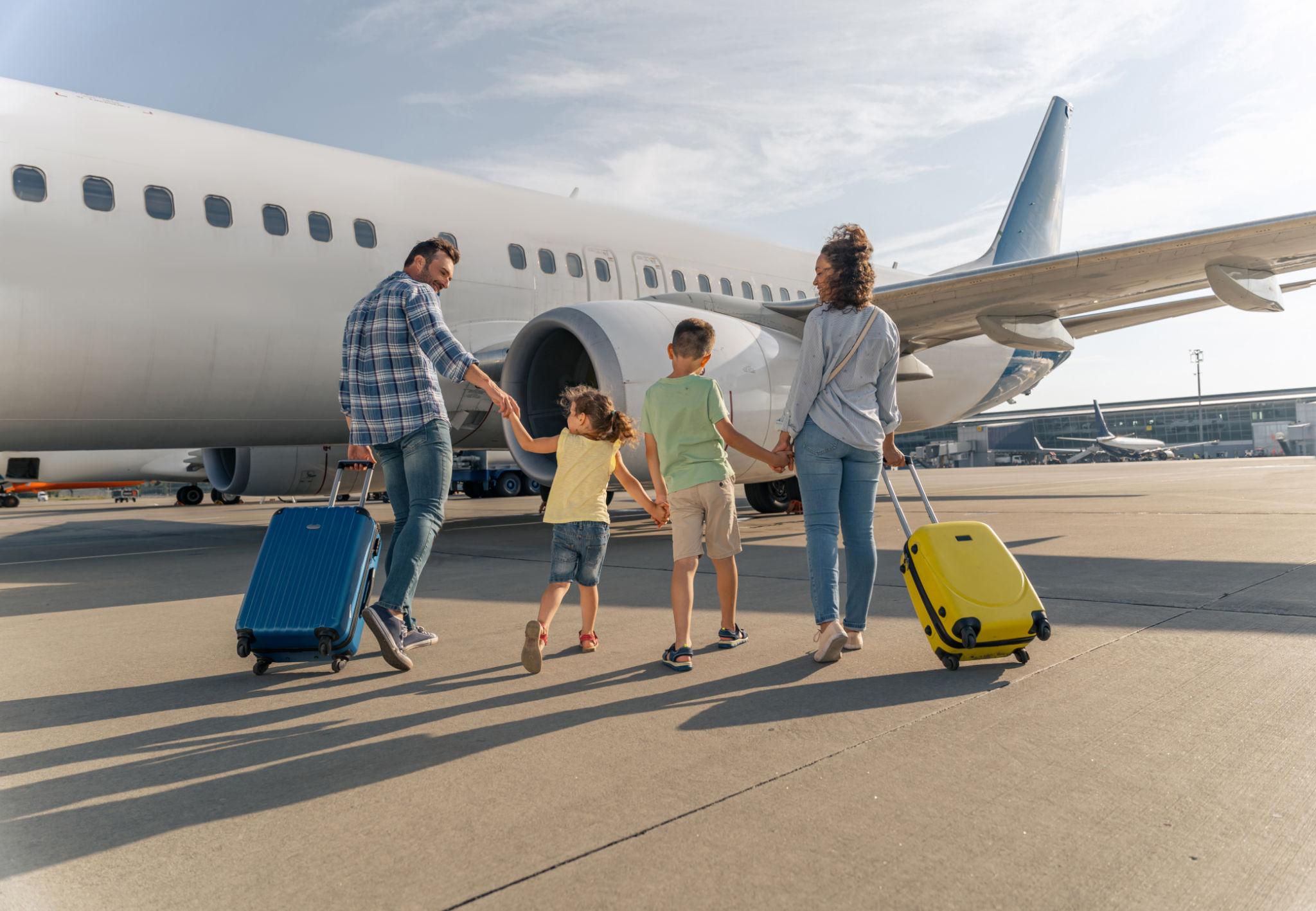
Arriving early isn’t just a safety buffer for security lines — it’s a child management strategy. Rushing through an airport with children creates anxiety that doesn’t dissipate once you reach the gate. Arriving with forty-five extra minutes means time to walk calmly, find the bathroom without urgency, and let kids observe the planes at the gate windows before boarding.
TSA PreCheck is worth every penny for families who fly more than twice a year. Keeping shoes on, laptops in bags, and moving through security quickly with children in tow reduces one of the most friction-filled airport moments significantly. The application process takes about ten minutes and the Known Traveler Number works across most major domestic airlines.
Making the Actual Flight More Manageable
Download everything before you board. Netflix, Disney Plus, and Amazon Prime Video all offer offline download options. Assuming airport or airplane WiFi will be reliable enough for streaming is a gamble that frequently doesn’t pay off at the exact worst moment.
Noise-canceling headphones for children — brands like Puro Sound Labs and BuddyPhones make kid-specific versions with volume limiting — make a significant difference on long flights. Airplane cabin noise is genuinely fatiguing for children’s ears, and reducing that background noise decreases irritability meaningfully over several hours.
Bring an empty water bottle through security and fill it at a fountain before boarding. Airplane cabin humidity is extremely low, and keeping children hydrated reduces headaches and mood changes that parents often misread as behavioral problems when they’re actually just dehydration.
The window seat is worth fighting for with young children. Watching the world from above keeps curious kids occupied through phases of a flight that would otherwise be difficult.
Road Trips With Kids: What Changes Everything
Road trips offer more flexibility than flying but create their own specific challenges. The combination of confined space, limited movement, and unpredictable timing requires a different set of strategies than airport travel.
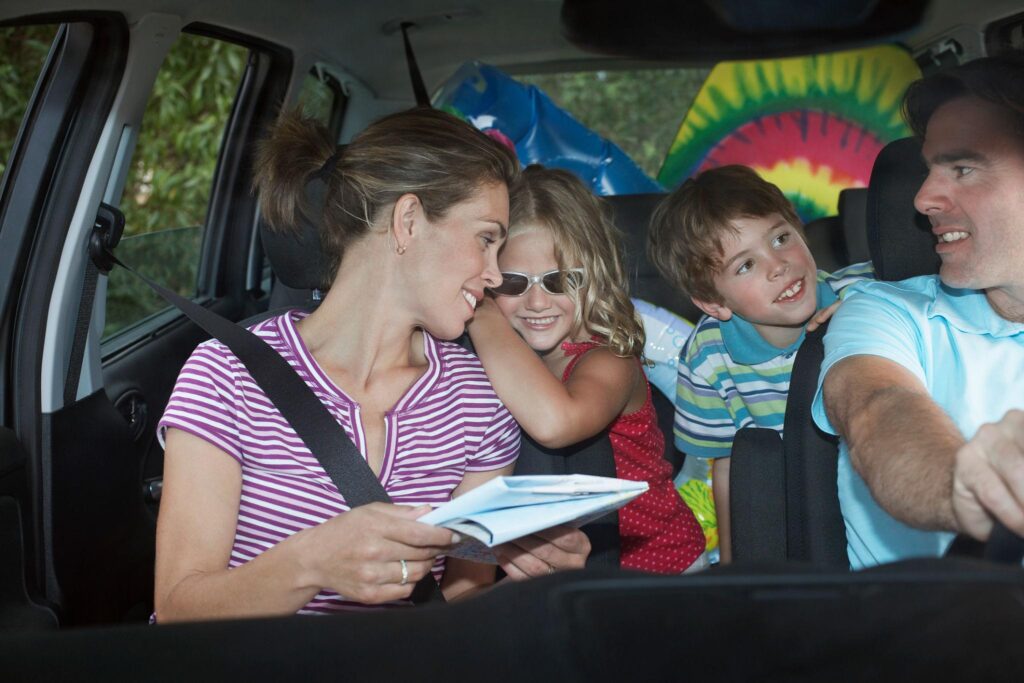
Plan stops deliberately rather than stopping only when someone desperately needs to. Stopping every ninety minutes to two hours — regardless of whether anyone has asked — prevents the building pressure that leads to meltdowns. Short active breaks where kids can genuinely run and move reset their nervous systems and extend the next driving stretch significantly.
The backseat organization matters more than most parents realize. A backseat organizer — hanging behind the front seats — keeps snacks, wipes, entertainment, and small toys immediately accessible without requiring anyone to dig through bags in the trunk at every stop. Brands like Lusso Gear and HighRoad make well-reviewed versions that hold tablets, snacks, and activity supplies within children’s reach.
The Playlist and Podcast Strategy
Audio entertainment is genuinely undervalued in family road trip planning. Audiobooks through Audible or LibriVox keep older children engaged in ways that passive screen watching sometimes doesn’t. Choosing a chapter book that continues across multiple driving days creates something to look forward to each morning.
Podcasts specifically made for children — Wow in the World, Circle Round, and Story Pirates are consistently excellent — provide entertainment that doesn’t require screen time and that parents can actually enjoy simultaneously. Finding audio content the whole family genuinely likes transforms driving time from something to survive into something to look forward to.
Music playlists deserve collaborative creation. Letting each family member add songs to a shared road trip playlist on Spotify or Apple Music generates investment and prevents the inevitable argument about what gets played. Children who helped choose the music are considerably more patient when something they don’t love comes on.
Hotels and Accommodations: Setting Up for Success
The hotel room dynamic is something first-time family travelers consistently underestimate. Sharing a single room with children of different sleep schedules, needs, and noise tolerances requires deliberate setup.
Booking a room with a separate sleeping area — a suite or a room with a connecting door — costs more but prevents the situation where a parent sits in complete darkness at 7:30 PM because a toddler’s sleep schedule makes any light or sound impossible. Several hotel chains including Marriott Residence Inn, Hyatt Place, and Embassy Suites offer suite configurations at prices that aren’t dramatically higher than standard rooms when booked in advance.
Travel blackout curtains are a genuine game-changer for families with young children. Portable versions like the ones from SlumberPod or simple suction-cup blackout blinds from Amazon weigh almost nothing and ensure nap times and bedtimes work in unfamiliar rooms regardless of what the hotel curtains actually block.
Requesting a room away from the elevator and ice machine when booking seems trivial until a toddler’s light sleep is repeatedly disrupted by hallway noise at 11 PM every night of your vacation.
The First Night Strategy
The first night in any new accommodation is almost always the hardest for young children. Unfamiliar smells, different sounds, and a new sleeping environment trigger alertness that fights against the tiredness parents desperately want to leverage.
Bringing a piece of home helps more than most parents expect. A familiar pillowcase, a specific stuffed animal that only travels, or even a small nightlight from home provides enough sensory familiarity to ease the transition. Keeping bedtime routine as close to home as possible — same sequence of bath, books, and songs even in a hotel room — signals to a child’s nervous system that sleep is coming despite the unfamiliar surroundings.
Common Mistakes That Derail Family Trips
Skipping nap time or rest periods to fit in more activities is the single most reliable way to destroy a family travel day. Overtired children don’t enjoy activities anyway — they endure them miserably before melting down completely. Protecting sleep protects the entire trip.
Forgetting to feed adults adequately creates a different but equally real problem. Hungry, depleted parents make worse decisions, shorter fuses, and less creative solutions to the inevitable problems that arise. Keeping adult snacks accessible alongside kid snacks is practical self-preservation, not a luxury.
Over-relying on screens as the only entertainment strategy backfires on longer trips. Screens are excellent tools and have a genuine place in family travel. Depending on them exclusively, however, means battery life and connectivity problems become family crises rather than minor inconveniences.
Neglecting to involve children in any planning creates unnecessary resistance. Children who had zero input in a trip feel no ownership over it. Even small choices — which restaurant for one dinner, which activity on one afternoon, which color suitcase they pack — generate investment that makes children more cooperative participants throughout.
Packing the medicine bag carelessly is a mistake that becomes catastrophic at 2 AM in an unfamiliar city. A dedicated, always-stocked medicine pouch with children’s acetaminophen, ibuprofen, antihistamine, bandages, and any prescription medications should travel in carry-on luggage on every single trip without exception.
What Makes the Memories Worth the Effort
Something shifts in family travel after a few trips done well. The logistics that felt overwhelming start feeling manageable. The buffer stops and snack bags and early hotel requests become automatic. Kids who travel regularly become better travelers — more adaptable, more patient with transitions, more curious about new places.

My daughter who announced she was “absolutely done” with the car at hour four of that first beach trip has since navigated three airports independently, slept in eleven different beds without complaint, and told me last year that her favorite thing about our family is that “we go places.”
That parking lot reset in Nashville turned out to be one of the most valuable moments of our parenting experience — not because it was fun, but because it taught us that family travel isn’t about perfection. Messy, imperfect, occasionally chaotic trips with the people you love most build something that smooth, stress-free solo travel simply can’t.
Preparation reduces the chaos. Flexibility absorbs what preparation misses. Patience — with kids, with partners, and with yourself — carries everything else across the finish line.
The beach is waiting. The road trip is worth it. Pack the snacks, download the audiobook, and go.